Why Veterans Bond With Dogs in the Field
Veterans Bond with Dogs for Reasons Most Don't Understand
2/6/20262 min read
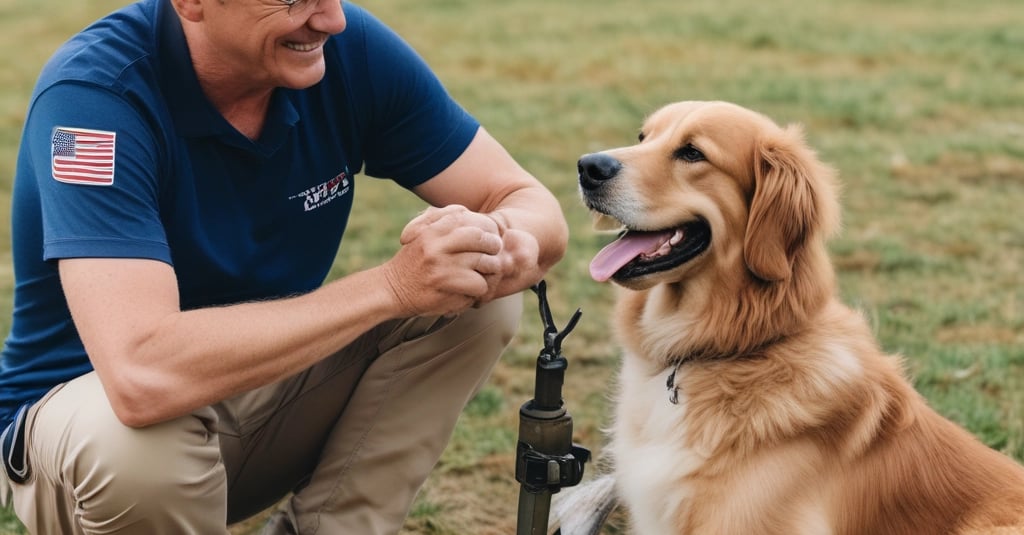
Why Veterans Bond With Dogs in the Field
Veterans bond with dogs for reasons that are often misunderstood.
It’s easy to assume the bond is emotional—that dogs provide comfort, companionship, or affection. Those things may be true, but they are not the primary reason dogs are so stabilizing for veterans.
The real reason is simpler and more demanding:
Dogs reintroduce responsibility.
Dogs Require Structure Whether You Feel Like It or Not
A dog does not care about your mood.
It needs to be fed, exercised, hydrated, trained, and protected regardless of how you feel. That requirement creates routine automatically. Not because it’s therapeutic, but because neglect has immediate consequence.
For veterans, this is familiar territory.
Responsibility that cannot be postponed.
Standards that cannot be ignored.
Outcomes that depend on follow-through.
That alone is grounding.
Dogs Make Planning Non-Optional
In the outdoors, a dog multiplies the cost of poor planning.
Water requirements increase. Temperature tolerance narrows. Rest cycles change. Abort criteria become stricter. Every system must account for another life.
This forces veterans to plan more deliberately than they might for themselves alone.
That planning restores discipline before the outing even begins.
You don’t go hoping things will work out when a dog is involved.
You prepare, or you stay home.
That binary clarity is stabilizing.
Why Dogs Regulate Veterans Physiologically
Studies repeatedly show that veterans with dogs experience:
lower baseline anxiety
improved emotional regulation
increased routine adherence
reduced isolation
But the mechanism isn’t emotional comfort alone.
Dogs force presence.
You cannot spiral internally while managing another being’s needs effectively. Your attention narrows. Your breathing slows. Your awareness shifts outward. Leadership replaces rumination.
This is not therapy.
It is regulation through responsibility.
Dogs Expose Weak Discipline Quickly
Dogs are honest mirrors.
If your discipline is inconsistent, your dog reflects it.
If your leadership wavers under fatigue, your dog notices.
If your standards change based on mood, your dog adapts—often poorly.
This exposure is not a flaw.
It’s feedback.
Veterans who lean into this feedback grow steadier. Veterans who avoid it often feel frustrated, not realizing the dog is revealing exactly where structure needs strengthening.
Shared Responsibility Restores Purpose
When something depends on you, effort matters again.
That is the core reason dogs restore purpose for veterans. Not because the dog gives purpose—but because the veteran becomes responsible again.
In the field, this responsibility sharpens judgment. You turn back earlier. You pace differently. You plan exits more carefully. You stop chasing discomfort for its own sake.
Purpose returns not as inspiration, but as restraint.
Why Dogs Belong in the Field, Not Just the Home
Dogs amplify everything outdoors teaches.
They:
raise the standard for preparation
increase consequence for poor decisions
reward calm, consistent leadership
penalize neglect immediately
This makes outdoor environments uniquely powerful for veterans with dogs. The field becomes a place where responsibility is undeniable and discipline is required—not performed.
Dogs Do Not Heal Veterans Accidentally
Dogs help veterans because they force structure back into daily life.
Handled casually, dogs magnify chaos.
Handled deliberately, they anchor discipline.
Veterans who thrive with dogs don’t rely on affection alone. They rely on systems, training, repetition, and leadership.
That combination rebuilds self-trust faster than comfort ever could.
And once self-trust returns, the bond deepens naturally—not because the dog fixes the veteran, but because the veteran is operating effectively again.