Your First Solo Trip After Service
What to Expect
2/6/20263 min read
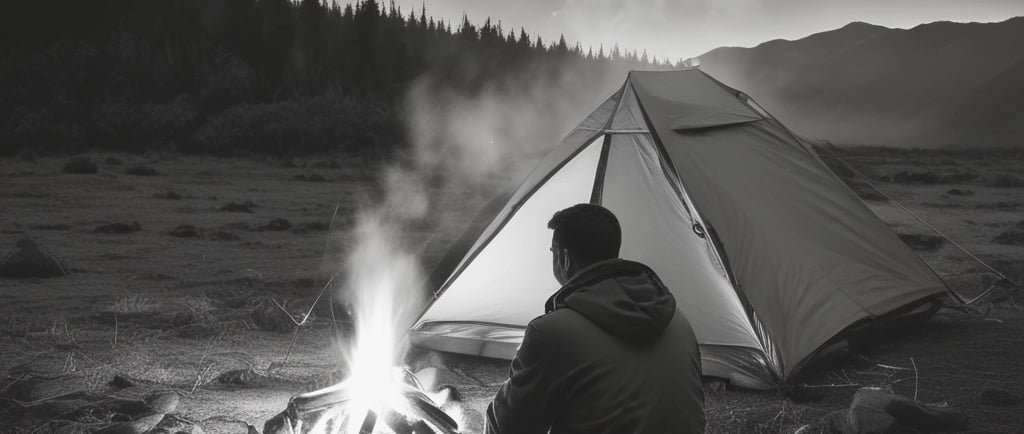
The First Solo Trip After Service: What to Expect
For many veterans, the first solo trip after service carries more weight than expected.
It may look simple on paper—a day hike, a night out, a familiar stretch of woods—but it often feels different once you commit to it. Not because the environment is new, but because you are operating without the structure you once took for granted.
During service, solitude was rarely absolute. Even when physically alone, you were operating inside a system—communications, timelines, command intent, contingency plans. You knew where you fit and what failure would mean.
A solo trip after service removes that scaffolding.
No one is tracking your movement.
No one is verifying your plan.
No one is enforcing timelines or standards.
For many veterans, that freedom is uncomfortable—not because they are afraid of being alone, but because nothing is requiring them to be ready.
Expect Mental Noise Before Physical Difficulty
The first thing most veterans notice on a solo trip is not the terrain or the weather. It’s the mental noise.
Questions surface that rarely appeared during service:
Did I plan this well enough?
Am I overthinking this?
What if I turn back early—what does that mean?
This internal dialogue isn’t weakness. It’s the mind recalibrating to an environment without external enforcement. In civilian life, backing out carries little consequence. In the outdoors, even a short solo trip restores consequence in small but meaningful ways.
You begin to notice details again.
You pay attention to time.
You think ahead instead of reacting.
That shift is the point.
The Absence of an Audience Changes Everything
One of the most important differences between service and civilian life is the presence of an audience. In service, actions are observed, evaluated, and recorded. Standards are enforced externally.
On a solo trip, there is no audience.
That absence can be disorienting. Without witnesses, discipline becomes a private decision. Preparation either happened or it didn’t. Turning back early is invisible to everyone but you.
This is where self-trust begins to rebuild—or erode.
If you cut corners because no one is watching, you notice it.
If you honor your plan quietly, you notice that too.
The outdoors does not judge these choices.
You do.
Expect Discomfort to Feel Personal at First
Many veterans are surprised by how personal discomfort feels on early solo trips.
Cold feels less heroic.
Fatigue feels less purposeful.
Rain feels less tolerable.
That’s because discomfort without mission feels unnecessary—until you reframe it.
Discomfort on a solo trip is not about toughness. It’s about feedback. It tells you whether your planning was adequate. It exposes where systems are weak. It highlights assumptions you didn’t realize you were making.
This is not a test of resilience.
It’s a diagnostic.
Planning Matters More Than Distance or Difficulty
One of the most common mistakes veterans make on their first solo trip is focusing on distance, difficulty, or novelty. They think the outing needs to “count” in some dramatic way.
It doesn’t.
What matters is planning and follow-through.
A short, deliberately planned trip builds more discipline than a long, impulsive one. Choosing conditions intentionally—weather, time, terrain—restores the habit of thinking ahead. Writing a simple plan and honoring it restores authority over your decisions.
That authority is what most veterans are missing—not adventure.
Turning Back Is Not Failure
Many veterans struggle with the decision to turn back early on solo trips. Without a team or mission, turning back can feel like quitting.
It isn’t.
Turning back when conditions warrant it is discipline, not retreat. It preserves capability. It reinforces judgment. It builds trust in your decision-making.
In service, good leaders did not push simply to prove toughness. They preserved force. They managed risk. They thought beyond the immediate objective.
A solo trip is where you relearn that skill privately.
What You Take Away Matters More Than What You Do
The value of a first solo trip is not measured by miles, elevation, or duration. It’s measured by what you carry back with you:
Evidence that you planned deliberately
Evidence that you honored commitments
Evidence that you adjusted without panic
Evidence that your judgment held
Those small pieces of evidence matter more than any story you could tell afterward.
They begin to replace doubt with self-trust.
And once self-trust returns, discipline stops feeling forced.
It starts feeling familiar again.